
 中文简体
 عربى
ZHONGSHENG
ZHONGSHENG
ZHONGSHENG
ZHONGSHENG
ZHONGSHENG
ZHONGSHENG
ZHONGSHENG
ZHONGSHENG
ZHONGSHENG

-
 13858226971@163.com
-
 Phone:+86-15344609926

Thermostatic Kettle PCB Supplier
-
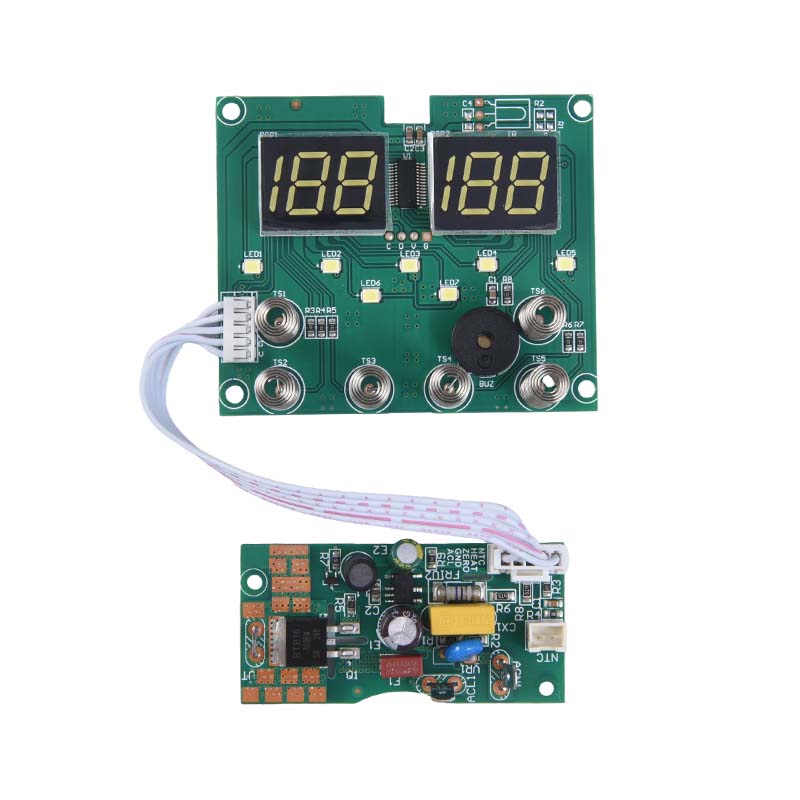

Baby Bottle Warmer Main Control PCB
-
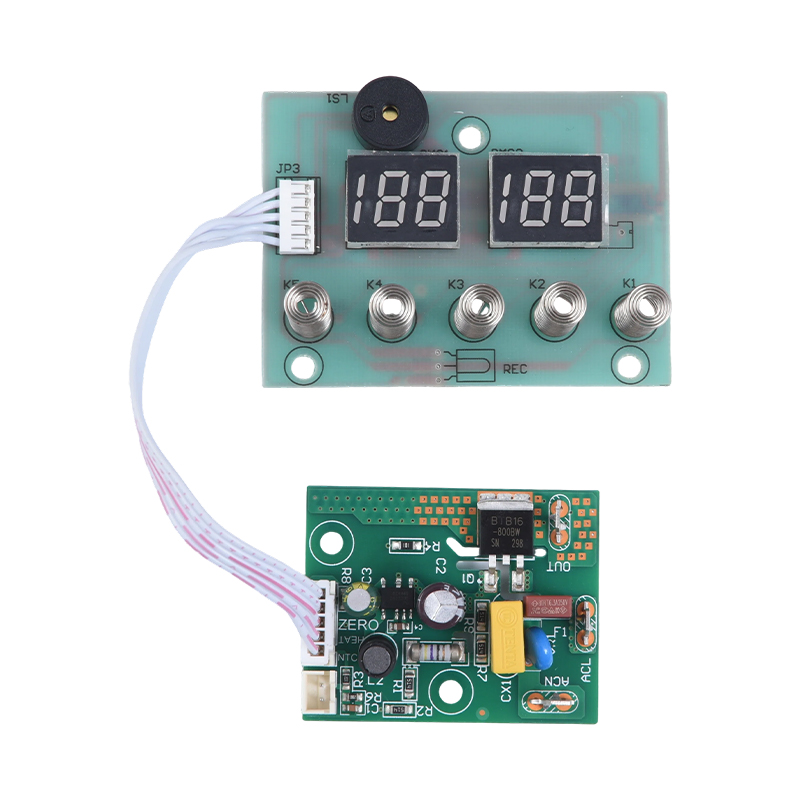
Baby Bottle Warmer Heating Control Board
-
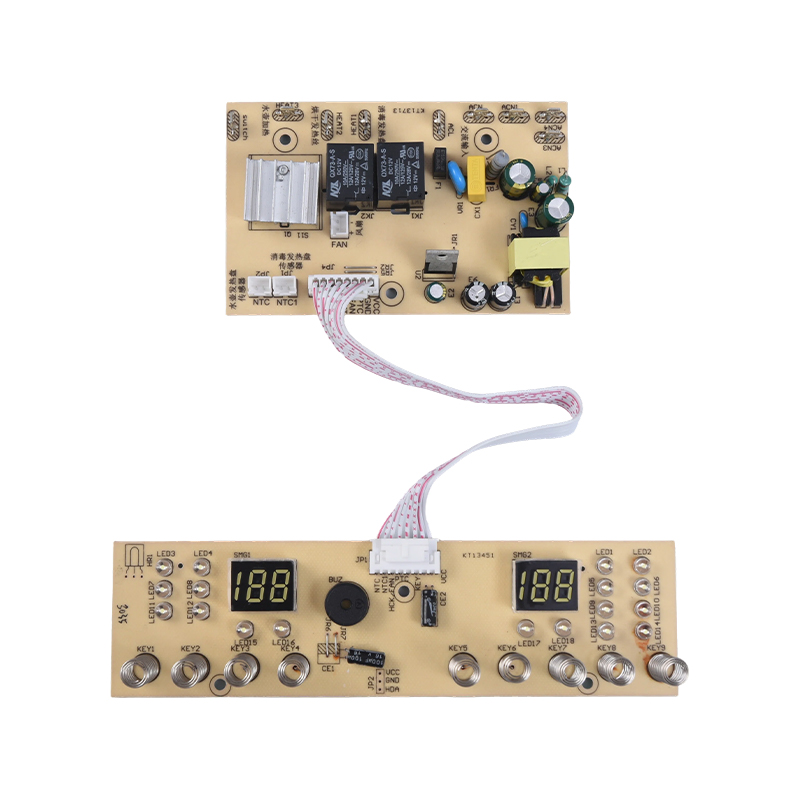
Temperature Sensor & Display Driver PCB for Bottle Warmer
The thermostatic kettle PCB is built for smart formula makers and health kettles, offering technical advantages such as milliwatt-level precise temperature control (±1°C), variable-frequency quiet boiling, and multiple dry-burn protections — making it more suitable than traditional mechanical temperature-control schemes for high-end products that require high-precision constant temperature, low-noise operation, and multi-stage keep-warm curve settings. This PCB series handles PID algorithm control of the high-power heating plate, real-time water-temperature acquisition and display, dechlorination/re-boil mode switching, and lift-off power-cutoff safety detection, and can be deeply customized for touch sensitivity, display drive, and moisture-proofing based on the customer's product appearance and market positioning.
About
Ningbo Zhongsheng Electronic Technology Co., LTD.
Ningbo Zhongsheng Electronic Technology Co., LTD. was established in 2015 and is located in the beautiful port city of Ningbo. We are a China Thermostatic Kettle PCB Supplier and OEM/ODM Thermostatic Kettle PCB Factory, specialize in the research and manufacturing of intelligent control systems for household appliances. We focus on the full-chain services of intelligent control boards and electronic products, from research and development to manufacturing, always adhering to the core concepts of "high cost-effectiveness" and "smart living". Ningbo Zhongsheng Electronic Technology Co., LTD. was established in 2015 and is located in the beautiful port city of Ningbo. We specialize in the research and manufacturing of intelligent control systems for household appliances. We focus on the full-chain services of intelligent control boards and electronic products, from research and development to manufacturing, always adhering to the core concepts of "high cost-effectiveness" and "smart living".
Message Feedback
Certificate Of Honour
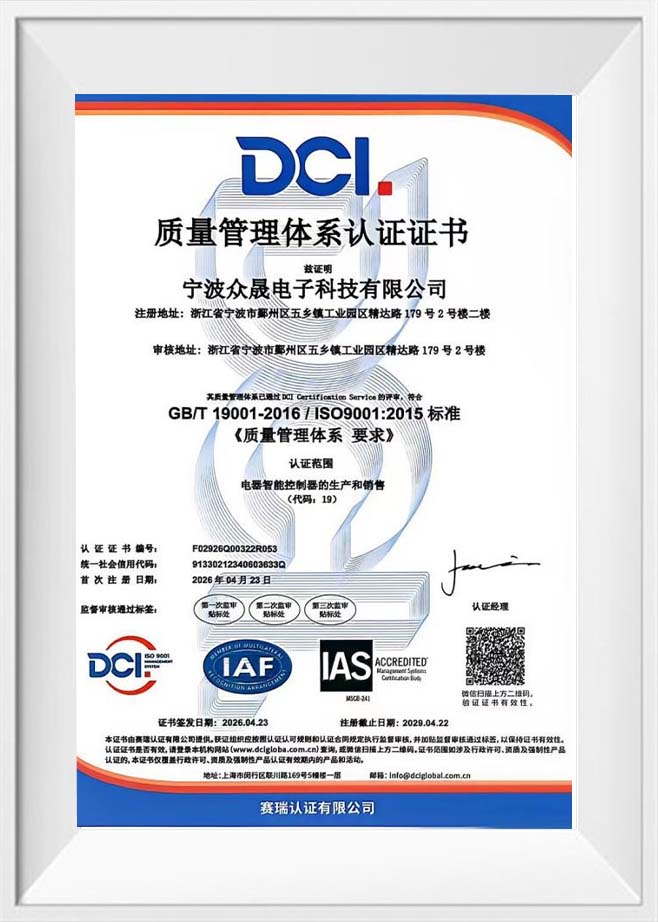
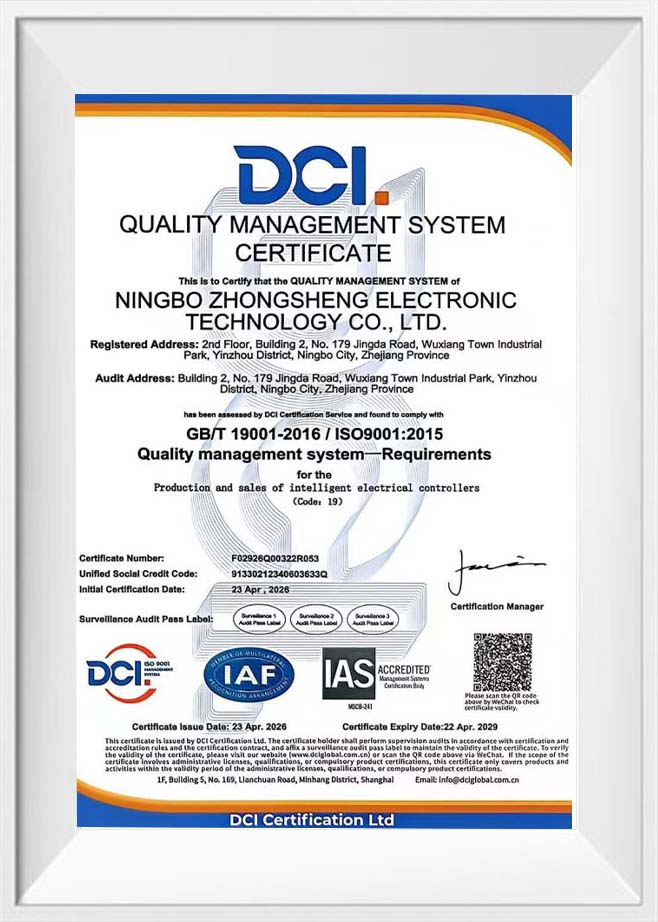
Latest News
Thermostatic Kettle PCB Industry knowledge
What B2B Buyers Should Know Before Sourcing a Thermostatic Kettle PCB
A well-designed Thermostatic Kettle PCB is the control board that reads the water temperature, switches the heating element, holds a chosen temperature, and cuts power when a fault appears. The short answer for buyers is that a good board combines accurate temperature sensing, stable keep-warm control, dependable boil-dry and overheat protection, and a layout that fits your kettle design and target market. In constant-temperature kettles used for tea, coffee, drink preparation, and travel, the board decides how close the water gets to the preset and how steady it stays, so it has a direct effect on how users rate the finished product.
This is why kettle brands, private-label owners, and contract manufacturers often look for a Thermostatic Kettle PCB Factory that handles circuit design, firmware, assembly, and testing under one roof. In the sections below, we cover which criteria buyers rank highest, what the board controls, how demand splits across kettle types, how electronic and mechanical thermostats compare, how the water temperature rises toward a preset, and where testing effort goes. The aim is practical: help you prepare a clear brief for a Thermostatic Kettle PCB Supplier and ask the right questions before requesting a sample.
The Sourcing Criteria Buyers Rank Highest for Kettle Control Boards
When procurement and engineering teams compare suppliers, a familiar set of criteria keeps coming up. The horizontal bar chart below shows an indicative importance index, scaled from 0 to 100, based on priorities commonly raised during supplier evaluations for thermostatic kettle control boards. Temperature accuracy sits at the top, because the whole point of a thermostatic kettle is to reach and hold the setting the user chose. Boil-dry and overheat protection follows closely, since a heating element running without enough water is a serious fault that the board must catch quickly. Sensor reliability comes next, as the temperature sensor is the eyes of the control loop and has to stay stable through many heating cycles. Keep-warm efficiency, preset and display usability, and customization flexibility complete the list, and the last of these often decides which supplier wins a long-term cooperation once the technical basics are met. Treat the chart as a planning aid rather than a fixed ranking, because each product and market weighs these items a little differently.
The practical lesson is that the top items are technical and testable, while the bottom ones are about how well a supplier works with your team. A reliable Thermostatic Kettle PCB Factory will show temperature calibration records, protection test results, sensor selection details, and a clear process for sampling, engineering changes, and delivery scheduling.
What the Control Board Does Inside a Thermostatic Kettle
A thermostatic kettle works like a small closed-loop control system. A temperature sensor, usually a thermistor, measures the water or the heating plate, and the controller compares that reading with the preset the user selected. The board then switches the heating element on and off, often with a relay or a triac, so the temperature rises to the target and stays close to it. At the same time, the board runs the display, the preset buttons, the buzzer, and the safety checks, which makes it the central part of the whole appliance.
Main Functions of a Thermostatic Kettle PCB
| Function Block | What It Does | Why It Matters |
|---|---|---|
| Temperature Sensing | Reads the thermistor and converts it to a temperature value | Accurate readings for the control loop |
| Heater Switching | Turns the heating element on and off through a relay or triac | Steady heat-up with limited overshoot |
| Preset and Keep-Warm Logic | Holds the chosen temperature for a set period | Water stays ready for use |
| Display and Buzzer | Shows temperature, mode, and status prompts | Clear feedback for the user |
| Safety Protection | Detects boil-dry, overheating, and sensor faults | Supports safe operation in fault conditions |
A short specification list helps a supplier quote and design faster. Most projects start by defining the following points:
- Rated input voltage, heating power, and the switching device preferred for the heater.
- Sensor type, mounting position, and the temperature range the kettle must cover.
- Preset temperatures, keep-warm duration, and temperature accuracy target.
- Display type, touch or button panel, buzzer prompts, and any wireless features.
- Housing dimensions, base connector design, and mounting points.
Which Kettle Types Use These Control Boards
Knowing where these boards are used helps buyers decide on board size, preset logic, and panel style. The column chart below shows an indicative split of control board demand by kettle type, based on common patterns in small household appliance manufacturing. Formula preparation kettles take the largest share, since they rely on reaching and holding specific water temperatures for drink preparation. Tea and coffee kettles follow, where several presets and a gooseneck-style design are common. Portable and travel kettles come next, with a focus on compact boards and efficient power use. Office and desktop kettles account for a smaller portion, while other designs make up the remainder. The mix varies by region and season, so treat it as a starting point for discussion rather than a forecast.
For a factory that serves kettle brands and OEM customers, this mix explains why a modular board platform is valuable. A Thermostatic Kettle PCB Supplier that can reuse a proven control core while adjusting the preset table, display layout, connectors, and protection features for each kettle type shortens development time and keeps quality consistent across the range.
Electronic Control Boards Versus Mechanical Thermostats
Buyers often ask how an electronic control board differs from a simple mechanical thermostat, and the radar chart below compares the two across five dimensions: temperature accuracy, preset flexibility, keep-warm stability, circuit simplicity, and feature expansion. The electronic board reaches further on temperature accuracy, preset flexibility, keep-warm stability, and feature expansion, because it measures the temperature directly and can follow any preset table stored in firmware. The mechanical thermostat reaches further on circuit simplicity, since it has few parts and needs no programming. Neither shape fills the chart, which is the real message: each approach suits a different product position. A kettle with several presets, a display, and a keep-warm mode needs an electronic board, while a basic single-temperature model may suit a mechanical design. The scores are illustrative and meant to support a discussion about product positioning.
For a kettle brand, the chart suggests a simple selection rule: choose an electronic board where several presets, a display, and keep-warm modes support the product story, and keep a mechanical design for simple single-temperature models. A Thermostatic Kettle PCB Factory that works with both approaches can compare them against your target market and feature list.
How Water Temperature Rises Toward a Preset
The heat-up curve is one of the clearest ways to judge a thermostatic kettle control loop. The line chart below shows an illustrative water temperature measured each minute while the kettle heats toward a 95 degree preset. The curve rises quickly at the start, when the heater runs at full power and the gap to the target is large. As the water approaches the preset, the rise slows, because the controller reduces the heating duty to avoid overshoot. A smooth, gentle approach to the target is a healthy sign, since it shows that the sensor reading and the control logic work together. A sharp overshoot, or a saw-tooth pattern around the target, would suggest a tuning problem or a sensor placement issue. These figures are illustrative, and real results depend on the water volume, heater power, sensor position, and kettle body.
In this example, the water moves from about 20 degrees at the start to 95 degrees at 4 minutes, with the rise easing off near the target. When you request samples, ask the supplier how the temperature is measured, how much water is used in the test, and how the control loop is tuned to limit overshoot, so the heat-up claims in your product materials match what you can support with data.
Where Testing Effort Goes in Kettle Board Production
Quality in a kettle control board is built into the process rather than inspected in at the end. The donut chart below shows an indicative split of testing effort across the main control areas in a typical production flow. Temperature calibration and accuracy tests take the largest slice, because every board has to read and hold temperatures within the agreed tolerance. Safety protection tests come next, covering boil-dry detection, overheat cut-off, sensor fault handling, and insulation checks. Soldering and optical inspection follows, since solder quality on high-current joints decides long-term reliability. Keep-warm endurance tests, along with packaging and labeling checks, make up the remainder. Seeing the effort laid out this way helps buyers ask better audit questions, such as how calibration is performed and how results are recorded for later traceability.
A supplier with documented procedures in each of these areas makes it easier for your own quality team, or a third-party inspector, to verify results. Batch records, component traceability, and clear corrective action steps are good signs of a mature operation, and they matter whether the order is for a single board model or a full family of kettle controllers.
Working with a Custom Board Partner from Concept to Shipment
A smooth project usually follows a predictable path. It starts with a brief covering the kettle type, input voltage, heater power, sensor type, preset temperatures, keep-warm needs, display and panel layout, and target certifications. The factory then proposes a circuit and layout or adapts an existing platform, followed by sample boards that are calibrated on your actual kettle body. After the sample is approved, pilot production confirms that the design holds up at volume, with attention to solder quality and calibration consistency. Mass production and final inspection come next, and the project closes with packing, documentation, and shipping coordination.
What helps most on the buyer side is sharing the kettle body and heater samples early, together with a clear specification for presets, tolerance, and safety scope. What helps most on the factory side is in-house capability across circuit design, firmware, assembly, and testing, which shortens the loop when a sample needs a tweak, such as a new preset, a revised keep-warm period, or an updated display layout. A trusted Thermostatic Kettle PCB partner that handles these steps in-house can keep the buyer informed with test data, revised drawings, and sample photos at each stage, which is especially useful for brands that run several product lines at once.
About Ningbo Zhongsheng Electronic Technology Co., LTD.
Ningbo Zhongsheng Electronic Technology Co., LTD. was established in 2015 and is located in the beautiful port city of Ningbo. We are a China Custom Intelligent Control Boards Manufacturer and PCB Board Factory, specializing in the research and manufacturing of intelligent control systems for household appliances. We focus on the full-chain services of intelligent control boards and electronic products, from research and development to manufacturing, always adhering to the core concepts of "high cost-effectiveness" and "smart living".
For kettle brands looking for a dependable Thermostatic Kettle PCB Supplier, this full-chain approach, covering research, design, production, assembly, and testing, offers a practical starting point. Working with a team that understands both household appliance behavior and electronic control helps connect the board with the heater, sensor, housing, and user experience of the finished kettle.
Frequently Asked Questions
Q1: What does a thermostatic kettle PCB do?
A1: It is the control board of the kettle. It reads the temperature sensor, switches the heating element, holds the preset temperature, runs the display and prompts, and handles safety protection.
Q2: Can the board be customized for my kettle?
A2: Yes. Board size, preset temperatures, keep-warm time, display and panel layout, connectors, and wireless options can usually be adapted, subject to your kettle design and the standards of your target market.
Q3: How is board reliability verified?
A3: Boards are typically checked through calibration tests, protection tests, burn-in under load, and inspection of solder joints, and the factory records the results so they can be reviewed batch by batch.
Q4: What should be checked on a sample before approving production?
A4: Check temperature accuracy at each preset, heat-up behavior, keep-warm stability, boil-dry and overheat protection, display and buzzer prompts, and connector fit, and compare them with the agreed specification.
Q5: How should a buyer evaluate a thermostatic kettle PCB factory?
A5: Review calibration records, test reports, sample quality, component traceability, and communication responsiveness, and consider a factory audit or third-party inspection before mass production begins.

-
 No. 179, Jingda Road, Wanshan Town, Yinzhou District, Ningbo City, Zhejiang Province, China
-
 +86-15344609926
+86 13858226971 -
 +86 13858226971
+86 15344609926 -
 13858226971@163.com
PRODUCTS
QUICK LINKS
SOCIAL MEDIA
Copyright © Ningbo Zhongsheng Electronic Technology Co., LTD. All Rights
Reserved
Thermostatic Kettle PCB Supplier
OEM/ODM Thermostatic Kettle PCB Factory
