

 中文简体
 عربى

ZHONGSHENG
ZHONGSHENG
ZHONGSHENG
ZHONGSHENG
ZHONGSHENG
ZHONGSHENG
ZHONGSHENG
ZHONGSHENG
ZHONGSHENG
The working principle of a Hot Water Pressure Washer PCB is simple to state: it reads signals from switches and sensors, then switches the pump motor and the heating system in a safe order. When the user pulls the trigger, the board starts the pump. When water temperature or flame status goes outside safe limits, the board reduces power or stops the machine.
A cold water washer needs the board to manage mainly one motor. A hot water model adds a second job: managing a heat source such as a diesel burner or an electric heating element. That second job brings temperature sensing, ignition control, flame detection and extra protection, which is why the board is more complex.
The sections below follow the signal path from input to output, then cover safety, design points and fault finding.
Content
- 1 The control sequence step by step
- 2 Input signals the board depends on
- 3 How the board drives the pump motor
- 4 How the board controls the heating system
- 5 Temperature regulation logic
- 6 Safety protections handled by the board
- 7 Why a hot water board differs from a cold water board
- 8 Design points for a reliable board
- 9 Common faults and likely board causes
- 10 What to check when sourcing a replacement or OEM board
- 11 Key takeaways
- 12 Sources and references
The control sequence step by step
Although layouts differ between machines, the logic on the board usually follows the same order.
- The board powers up and checks that the safety inputs are normal, for example the thermal switch, water flow switch and fuel level input.
- The user sets the desired water temperature with a knob or buttons, and the board stores this target.
- When the trigger gun is pulled, a pressure or flow signal tells the board that water is being used.
- The board switches on the pump motor through a relay, contactor or power switch.
- Once flow is confirmed, the board starts the heating sequence, for example burner fan, ignition and fuel valve.
- A temperature sensor reports the outlet water temperature, and the board adjusts heating on and off to hold the target.
- When the trigger is released, the board stops the pump and burner, often with a short fan run on to clear the combustion chamber.
Input signals the board depends on
The board cannot control what it cannot measure. These inputs form its picture of the machine.
| Input | Typical device | What the board learns |
|---|---|---|
| Water temperature | NTC thermistor | Current outlet temperature |
| Water flow or pressure | Flow switch or pressure switch | Whether water is moving through the system |
| Flame status | Photo sensor or flame electrode | Whether the burner is really burning |
| Motor protection | Thermal cutout | Whether the pump motor is overheating |
| User settings | Knob, buttons or display keys | Target temperature and mode |
| Fuel level | Float switch | Whether fuel is available |
An NTC thermistor is a resistor whose resistance falls as temperature rises. A common type measures 10 kilohm at 25 C. The board reads the voltage across it and converts that value into a water temperature using a lookup table stored in the microcontroller.
How the board drives the pump motor
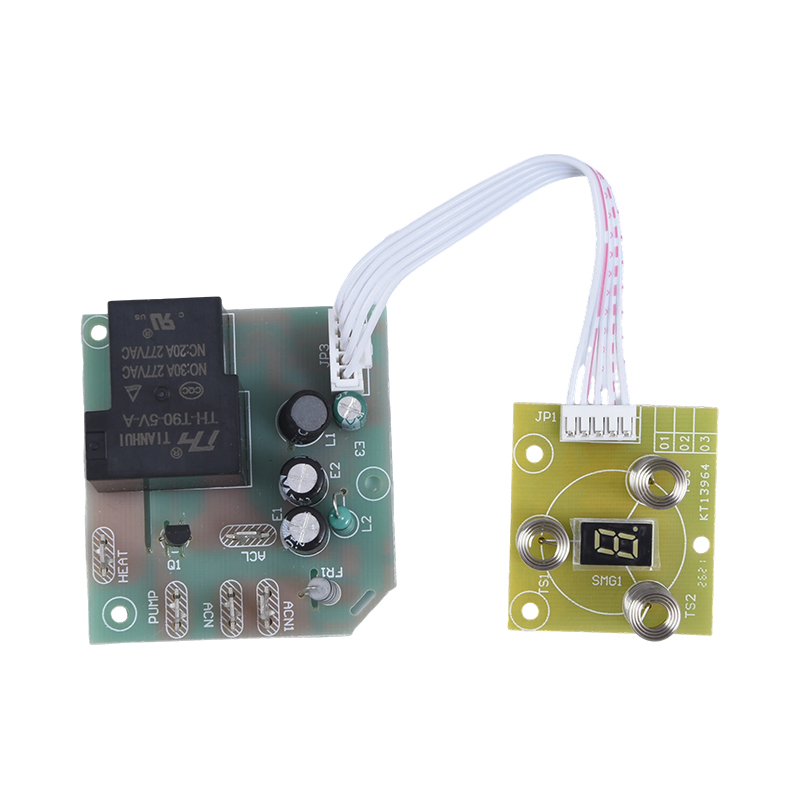
The pump motor is the highest current load on the board in many designs, so it is usually switched by a relay or contactor rated well above the motor running current. The board must also handle the starting surge, which can be several times the running current for a short moment.
Most machines use a total stop function. When the trigger is released, water flow stops, pressure rises and the pressure or flow switch signals the board to cut the motor. This reduces wear and noise and saves energy. A good Hot Water Pressure Washer PCB adds a short delay and debounce to this signal so that small pressure ripples do not cause rapid motor cycling.
How the board controls the heating system
Why heating needs a dedicated sequence
Heating cold water takes a lot of energy. Using the standard specific heat of water of about 4.186 kJ per kg per degree C, raising 8 liters per minute by 50 C needs roughly 28 kW of heat. This is a calculation example, not a rated figure for any one machine. Because ordinary mains sockets cannot supply this power, many hot water pressure washers use a diesel or gas burner, while electric models are limited to smaller temperature rises.
Burner control logic
For a burner type machine, the board runs a timed sequence:
- Start the burner fan to purge the chamber of old fumes.
- Energize the ignition transformer to create a spark.
- Open the fuel solenoid valve and let fuel mix with air.
- Check the flame sensor within a few seconds, and shut the fuel valve if no flame is detected.
- Hold the burner on until the water reaches the target, then switch off and wait for the temperature to fall.
Electric heater control
For an electric heating element, the board switches the heater through a relay or a power semiconductor and uses the temperature sensor to turn it on and off around the set value. A small temperature band, called hysteresis, prevents the heater from switching too often.
Temperature regulation logic
The microcontroller compares measured temperature with the set value and decides whether to heat. Two methods are common.
| Method | How it works | Result |
|---|---|---|
| On and off control | Heat is on below the set value and off above it, with a small band | Simple and low cost, with some temperature swing |
| Proportional control | Heating power is adjusted according to the gap from the target | Steadier temperature, needs more capable output stages |
Why does temperature matter so much for cleaning results. The cleaning industry often describes this with the Sinner circle, introduced by Dr. Herbert Sinner, which says that cleaning depends on four factors: mechanical action, chemistry, time and temperature. If temperature rises, less of the other three is needed, which is the practical value of hot water. Stable temperature control on the board therefore translates directly into cleaning performance.
Safety protections handled by the board
Hot water, high pressure, mains voltage and fuel combustion all exist in one machine, so protection is a core part of the board design. Requirements for these machines are covered in IEC 60335-2-79, the particular safety standard for high pressure cleaners and steam cleaners from the International Electrotechnical Commission.
| Protection | Trigger | Board action |
|---|---|---|
| Flame failure | No flame after ignition or flame lost | Close fuel valve and lock out |
| Overtemperature | Water above the safe limit | Stop heating, and stop the machine if needed |
| Dry run or no flow | No water movement while heating is requested | Block heating to avoid damage |
| Motor overheating | Thermal cutout opens | Cut pump power |
| Sensor fault | Open or shorted temperature sensor | Stop heating and show an error code |
| Low fuel | Fuel float switch open | Prevent burner start |
Why a hot water board differs from a cold water board
Many buyers ask whether a cold water washer board can be reused. The answer is usually no, because the hot water version has extra hardware and stricter conditions.
- More outputs: burner motor, ignition transformer, fuel valve and heater, in addition to the pump.
- More inputs: temperature, flame, flow and fuel level.
- Higher ambient temperature near the heater and exhaust.
- Strong electrical noise from the ignition spark.
- More safety logic and more fault codes.
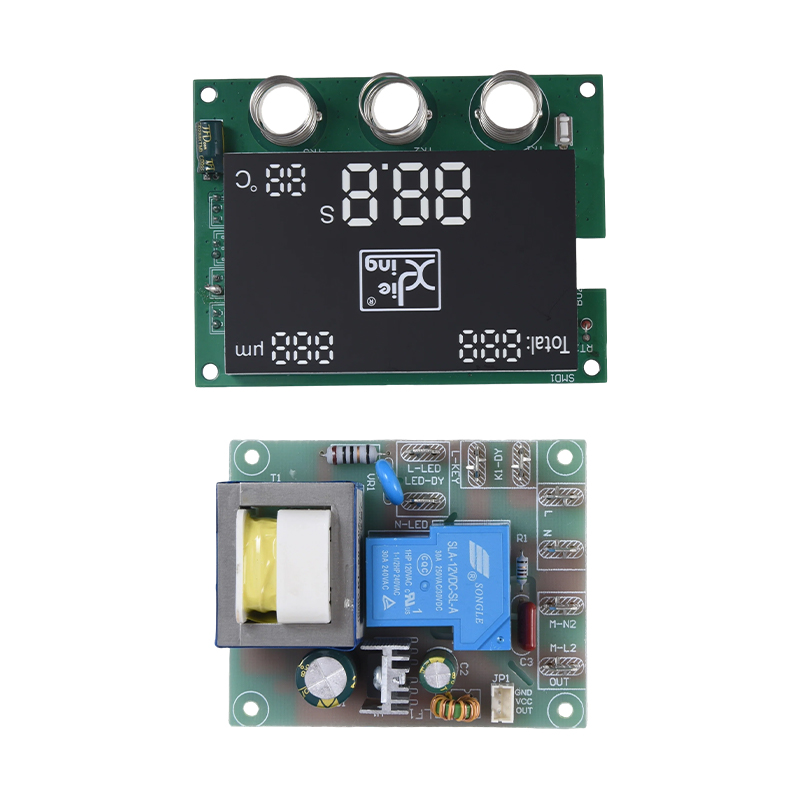
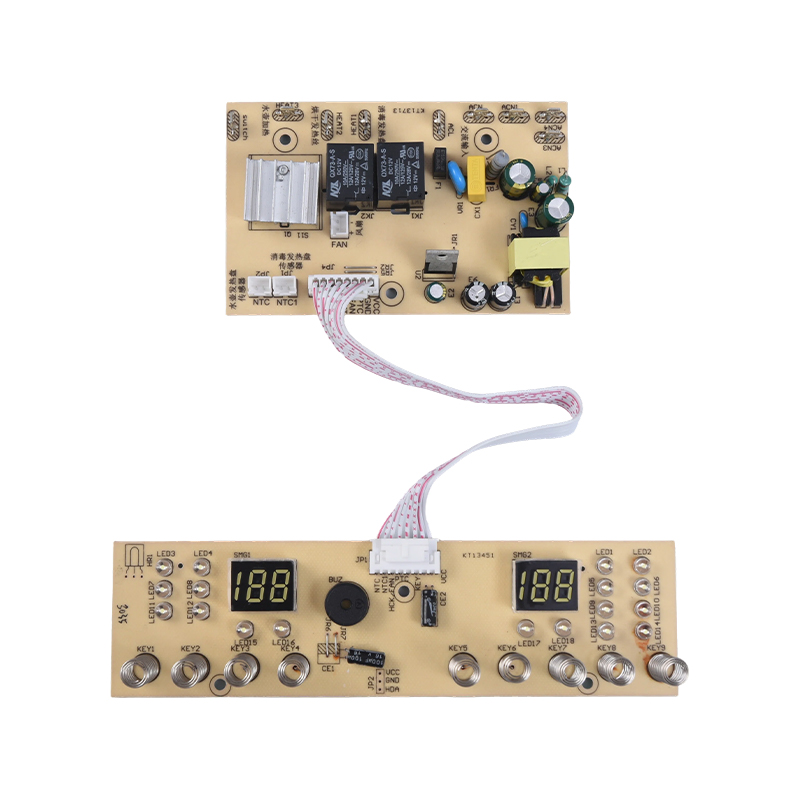
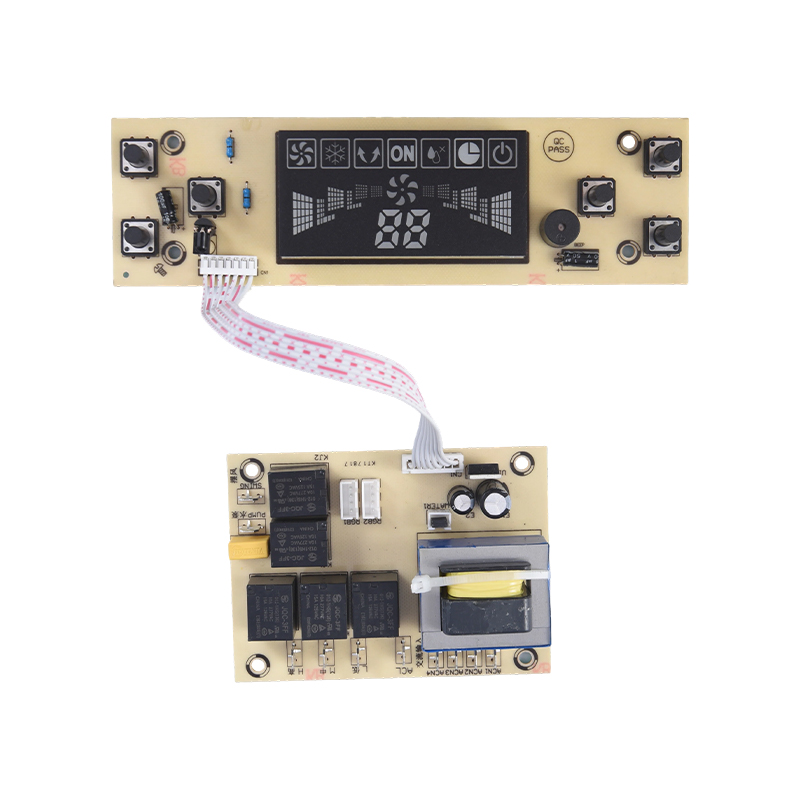
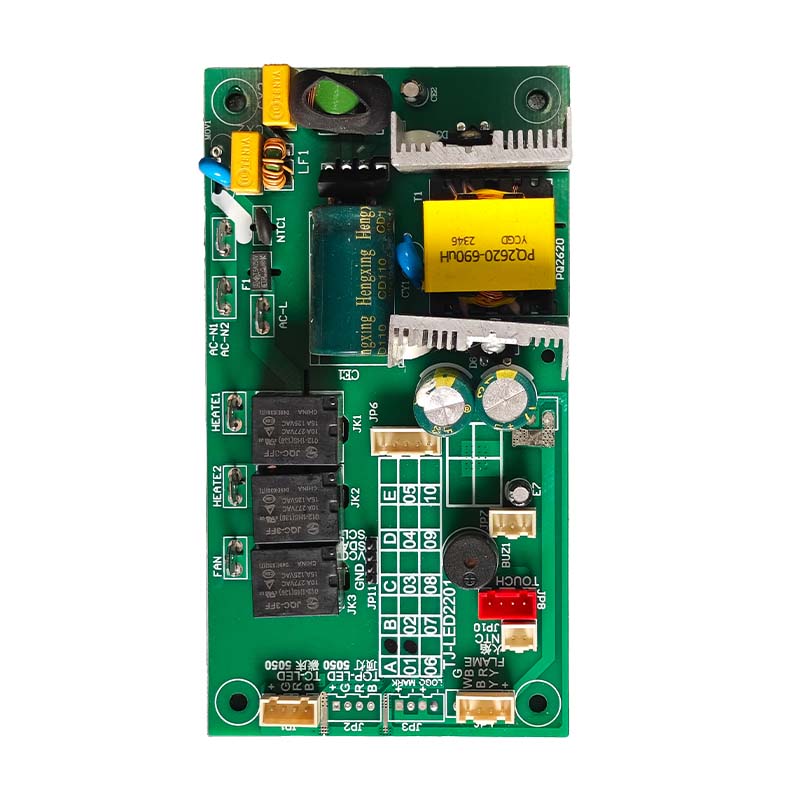
Our Hot Water Pressure Washer PCB is built around these extra needs, with output stages and protection logic matched to the heating method of your machine.
Design points for a reliable board
Handle ignition noise
An ignition transformer produces high voltage pulses that can disturb the microcontroller and sensor signals. Good boards use filtering, careful grounding, separation of high voltage and logic areas and firmware that tolerates brief glitches. Emission limits for household and similar appliances are described in CISPR 14-1.
Survive heat, water and vibration
Pressure washers vibrate and are often used outdoors, so the board needs secure connectors, reinforced solder joints for heavy parts and a protective coating against moisture and cleaning spray. Workmanship can be judged against IPC-A-610, and coating guidance is given in IPC-CC-830.
Size the power parts with margin
Relays and power switches should have a clear current margin above the pump motor and heater load. An undersized relay is a frequent cause of contact welding and early failure.
Make faults easy to find
Clear error codes on the display or indicator LEDs shorten repair time for service teams and reduce unnecessary part replacement.
Common faults and likely board causes
| Symptom | Possible cause related to the board |
|---|---|
| Pump does not start | Pump relay failure or missing trigger signal |
| Water stays cold | Burner output fault, flame sensor fault or heater relay failure |
| Burner starts then stops | Weak flame signal or flame sensor input fault |
| Temperature reading is wrong | Temperature sensor circuit problem |
| Machine restarts by itself | Unstable power supply on the board or electrical noise |
| Error code on display | A protection input has triggered, and the sensor or wiring should be checked first |
Because several of these symptoms can come from wiring, sensors or the burner itself, a technician should check the external parts before replacing the board.
What to check when sourcing a replacement or OEM board
- Heating type supported, such as diesel burner, gas burner or electric heater.
- Motor voltage and current rating, and the relay or switch rating used.
- Sensor types accepted, including the thermistor value and flame sensor type.
- Protection functions and the error codes provided.
- Coating, test process and workmanship standard followed.
- Customization of connectors, display and firmware to your machine.
You can find the product details on the zs-pcba.com page for the Hot Water Pressure Washer PCB, and our engineers can discuss custom versions for your model.
Key takeaways
A Hot Water Pressure Washer PCB works by reading user input and sensor signals, then driving the pump and the heating system in a safe sequence while watching for faults. The heating sequence, temperature control and safety lockouts are what separate it from a cold water board. Choosing a board with matched output stages, noise tolerance and clear protection logic gives a more stable and safer machine.
Sources and references
- IEC 60335-2-79, safety of household and similar electrical appliances, particular requirements for high pressure cleaners and steam cleaners (International Electrotechnical Commission).
- CISPR 14-1, electromagnetic compatibility, emission requirements for household appliances (International Electrotechnical Commission).
- IPC-A-610, acceptability of electronic assemblies, and IPC-CC-830, conformal coating qualification (IPC).
- Sinner circle of cleaning, attributed to Dr. Herbert Sinner and widely used in the cleaning industry.
- Specific heat of water of about 4.186 kJ per kg per degree C, standard physical reference value.
- The heating power example, sequence steps and tables are our own engineering summary and calculation, not results of a published study.