
 中文简体
 عربى
ZHONGSHENG
ZHONGSHENG
ZHONGSHENG
ZHONGSHENG
ZHONGSHENG
ZHONGSHENG
ZHONGSHENG
ZHONGSHENG
ZHONGSHENG

-
 13858226971@163.com
-
 Phone:+86-15344609926

Air Cooler PCB Board Manufacturer
-
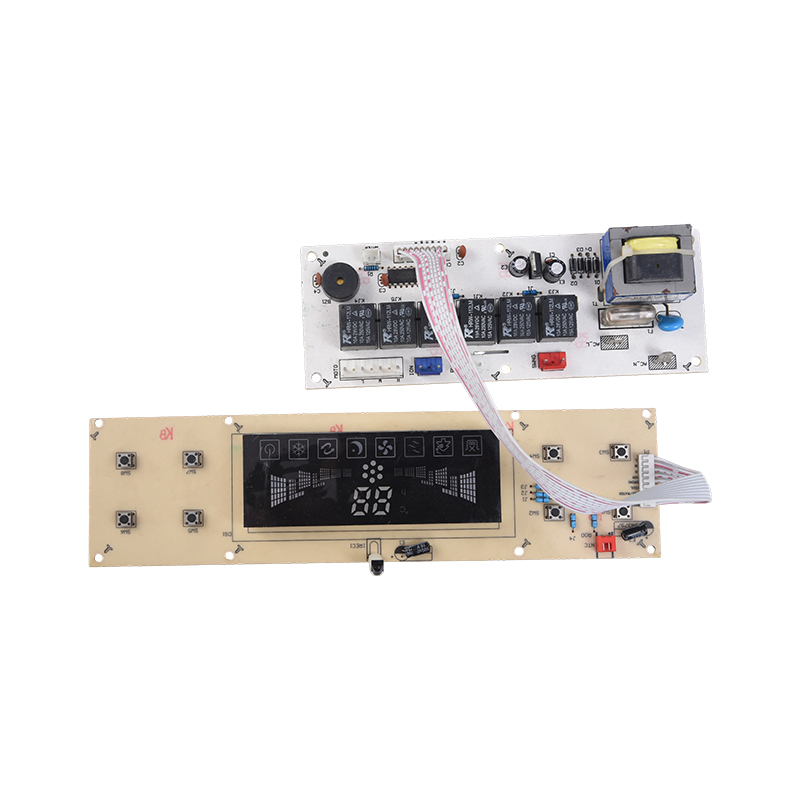

AC Evaporative Air Cooler Control PCB
-
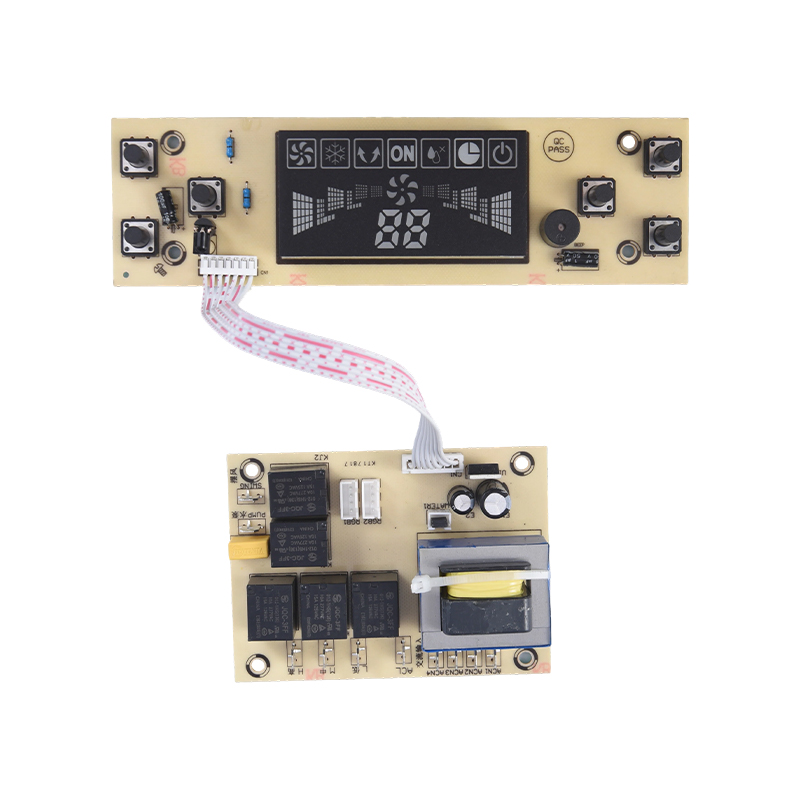
AC Evaporative Cooler Main Control PCB
-
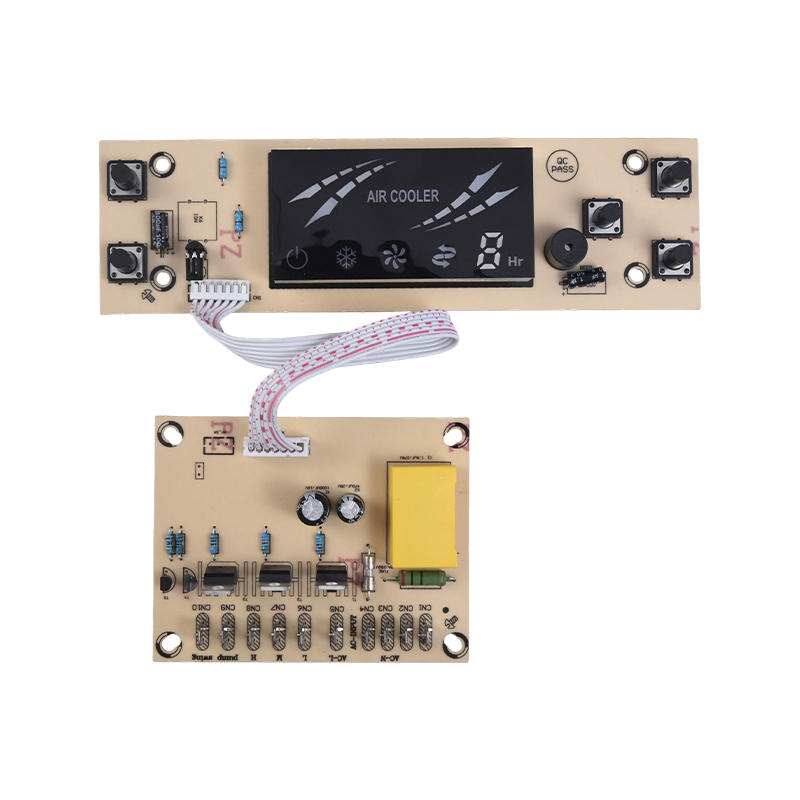
AC Evaporative Air Cooler Control Board
-
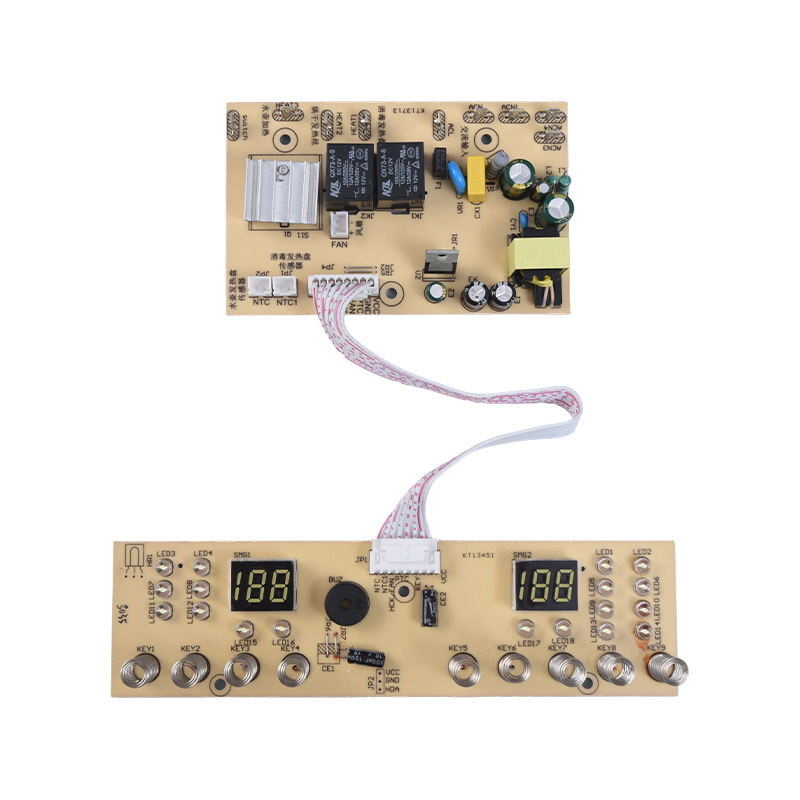
AC Evaporative Cooler Motor Control PCB
-
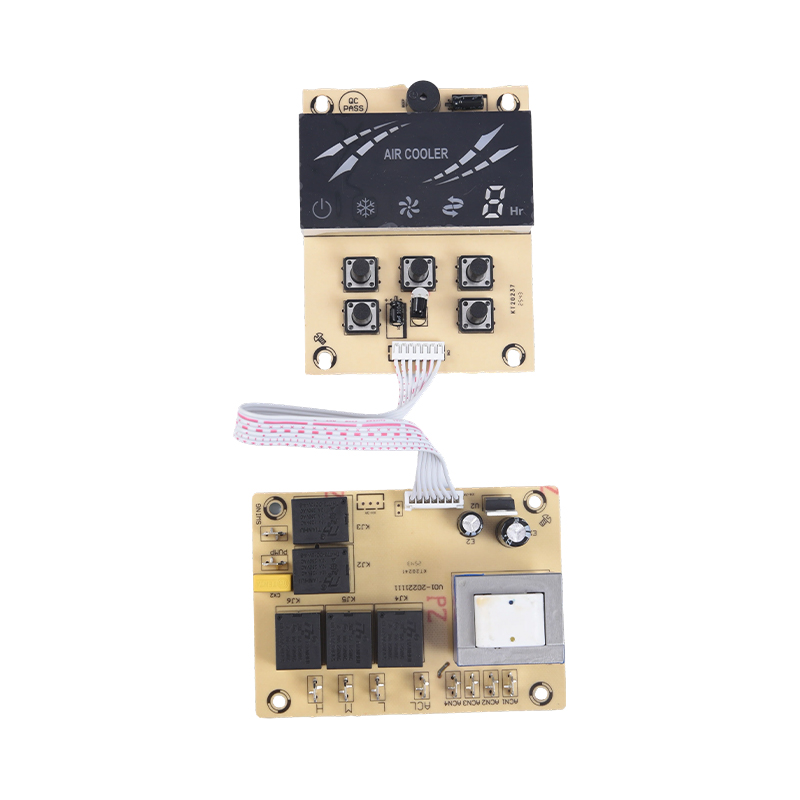
AC Evaporative Cooler PCB Controller Module
-
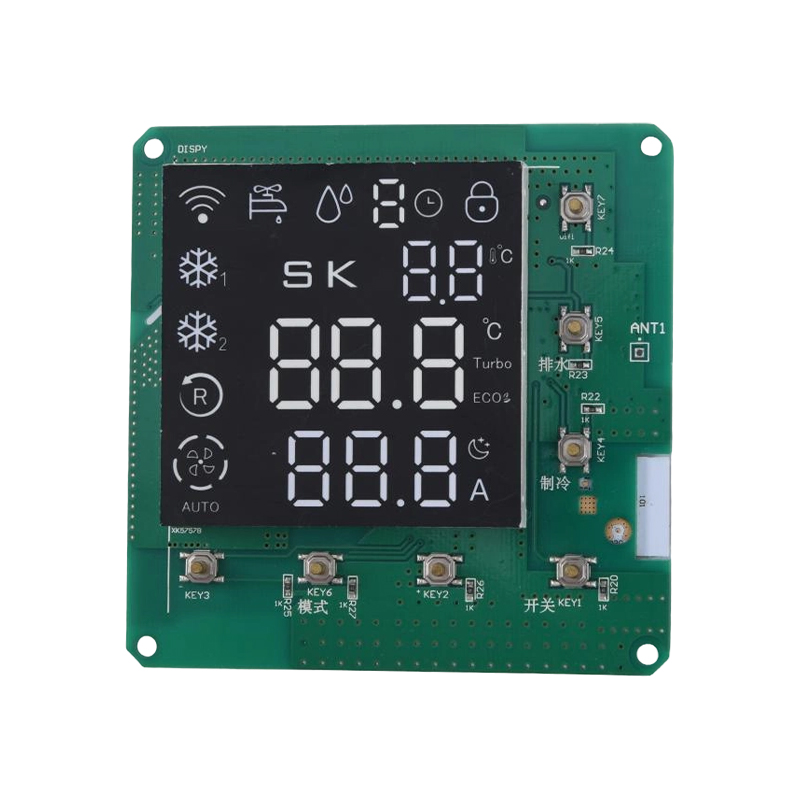
DC Evaporative Air Main Control Cooler PCB
-
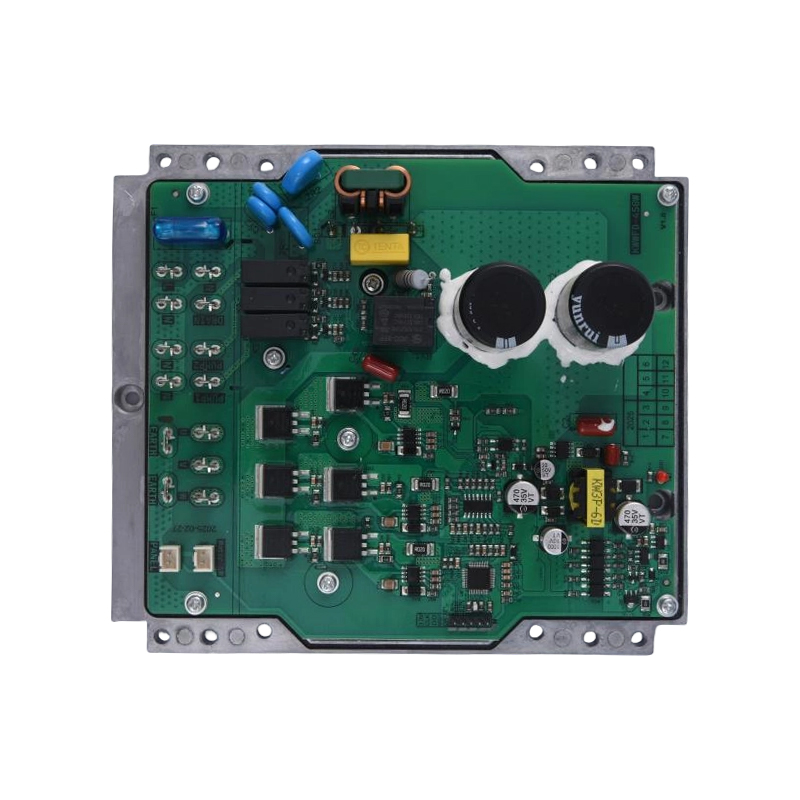
DC Evaporative Air Cooler Driver Board
As a professional developer and manufacturer of evaporative air cooler PCB control boards, we focus on providing one-stop PCB solutions—from scheme design to mass production delivery—for household, commercial, and industrial evaporative cooling equipment. We have development capability across both AC-driven and DC brushless variable-frequency-driven technology routes, and can customize core control logic such as fan speed adjustment, water pump management, oscillation control, and temperature/humidity sensing based on the cooler's power rating, control method (button/remote/touch/smart app), and protection rating requirements. All products use high-quality substrates and components and pass rigorous aging and EMC testing to ensure long-term stable operation under humid, high-load conditions. Drawing on years of PCB design and SMT mass-production experience, we provide OEM/ODM one-stop services to air cooler manufacturers and brands worldwide, flexibly supporting everything from schematic design and sample verification to bulk delivery — helping customers speed up new-product launch cycles and lower overall R&D costs.
About
Ningbo Zhongsheng Electronic Technology Co., LTD.
Ningbo Zhongsheng Electronic Technology Co., LTD. was established in 2015 and is located in the beautiful port city of Ningbo. We are a China Air Cooler PCB Board Manufacturer and Custom PCB Air Cooler Factory, specialize in the research and manufacturing of intelligent control systems for household appliances. We focus on the full-chain services of intelligent control boards and electronic products, from research and development to manufacturing, always adhering to the core concepts of "high cost-effectiveness" and "smart living". Ningbo Zhongsheng Electronic Technology Co., LTD. was established in 2015 and is located in the beautiful port city of Ningbo. We specialize in the research and manufacturing of intelligent control systems for household appliances. We focus on the full-chain services of intelligent control boards and electronic products, from research and development to manufacturing, always adhering to the core concepts of "high cost-effectiveness" and "smart living".
Message Feedback
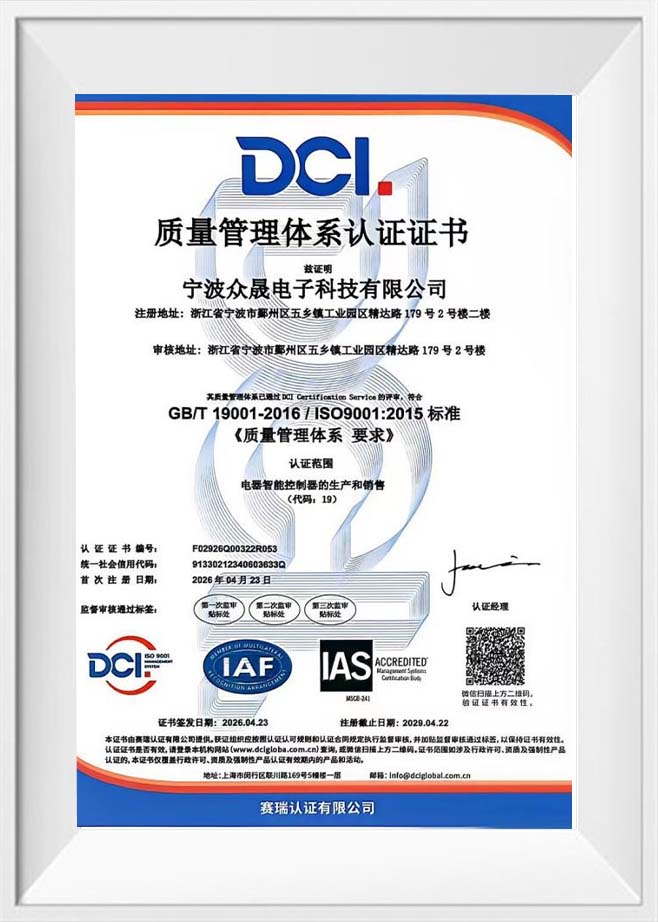
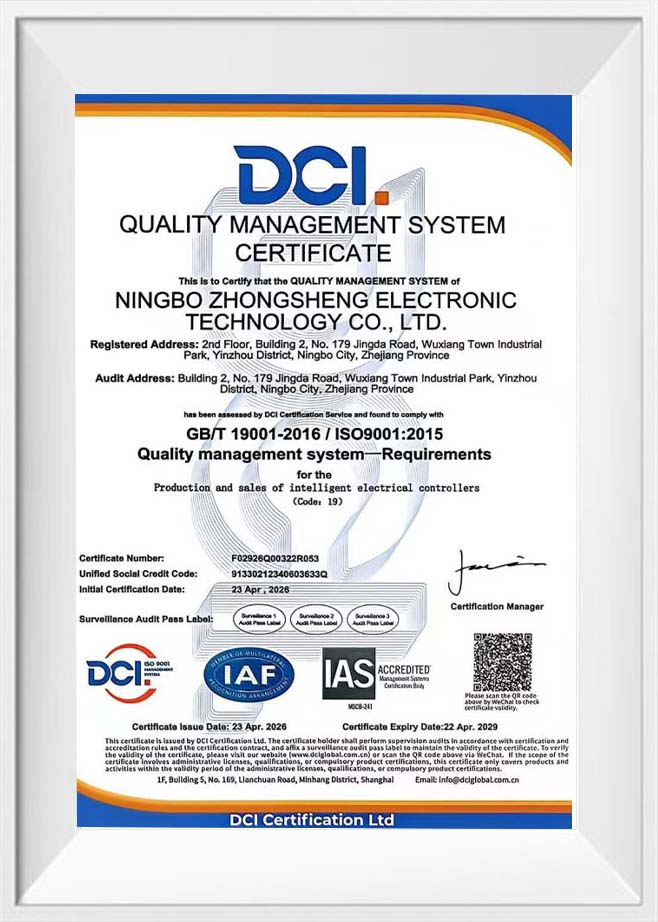
Certificate Of Honour
Latest News
Evaporative Air Cooler PCB Industry knowledge
What an Evaporative Air Cooler PCB Does Inside the Product
The short answer for appliance brands, OEM buyers, and sourcing teams is this: an Evaporative Air Cooler PCB is the control center of the cooler. It reads the user's settings, runs the fan and water pump, watches the water level, and shuts the product down safely when something goes wrong. Because the board works in a damp, warm environment next to a water tank, humidity resistance and protection features matter more here than in many other appliances.
This article is written for buyers rather than engineers. It explains what a PCB air cooler board is responsible for, shows how moisture protection and fan control affect performance, compares common board types, and outlines what to ask a manufacturer before starting a project. The charts use illustrative index values to make comparisons easier to read, so they should be treated as a planning aid rather than test results for any single product.
How Moisture Protection Changes Board Reliability
An evaporative cooler works by moving air across wet pads, so the air inside the housing is more humid than in most appliances. The horizontal bar chart below scores three protection levels on a 0-100 humidity resistance index, which reflects how well the board resists corrosion, leakage current, and moisture-related faults over time.
The strongest result comes from combining a protective coating with sealed or separated zones for sensitive parts, because each layer covers weaknesses the other leaves open. A conformal coating forms a thin film over the board that blocks moisture and dust from reaching copper and solder joints. Sealing or potting key areas, such as the power section and sensor connections, adds a second barrier where leakage would do the most harm. A standard uncoated board may work well in a dry room, yet it can develop corrosion or leakage faults in a humid cooler after a season or two. For a brand, that difference shows up as fewer warranty claims and a product that behaves the same in year three as in year one.
What a PCB Air Cooler Board Is Responsible For
A PCB air cooler board does more than switch a fan on and off. It coordinates several parts that must work together safely, and a small design mistake in any one of them can affect the whole product. Understanding these roles helps buyers write clearer specifications and compare proposals fairly.
Key Parts and Functions on the Board
- Control chip: reads buttons or remote commands and decides what the fan, pump, and display should do.
- Power supply section: converts mains voltage to the lower voltage the control circuits need.
- Motor drive circuit: sets fan speed through steps or smooth stepless control.
- Pump control: switches the water pump that keeps the cooling pads wet.
- Water level sensing: detects a low tank and stops the pump to prevent dry running.
- Protection circuits: guard against overcurrent, overheating, and faults in the power supply.
When a manufacturer designs these sections together and tests them as one system, the finished evaporative air cooler PCB tends to behave more predictably in the field.
Which Functions Buyers Prioritize on an Air Cooler Board
Brands rarely ask for every possible feature, and the mix depends on the product's market position. The column chart below shows how often each function is treated as a core requirement, on an illustrative percentage scale.
Fan speed control leads at 94%, which makes sense because airflow is the main thing users feel and adjust. Pump control comes next, since the pads must stay wet for the cooler to work as intended. Water level protection ranks high because running a pump dry can damage it quickly, so many brands treat this as a basic safety feature. Timer and remote functions sit in the middle, often chosen as a way to separate entry-level models from premium ones. Oscillation control ranks lowest but still matters, since it drives a small motor that must be coordinated with the fan. Knowing this spread helps a buyer decide which functions belong on every model and which can be reserved for higher tiers.
How Smooth Fan Speed Control Works
Many modern coolers replace a few fixed speed steps with smooth, stepless control, which feels quieter and more precise to users. The line chart below illustrates how fan speed typically rises as the control signal, known as the duty cycle, increases from 20% to 100%.
Speed rises from about 22% at a 20% duty cycle to 100% at full duty, and the relationship is close to a straight line through most of the range. A near-linear response is useful because users feel each step on the dial or remote as an even change, rather than a sudden jump. The lower end of the curve is also shaped by the motor, since most fans need a minimum signal before they start turning reliably. A good board design sets this starting point carefully so the fan neither stalls nor starts too abruptly at low settings. When comparing designs, it is worth asking how the speed curve was tuned for the specific motor and whether the board supports a gentle start to reduce noise.
Strengths and Trade-offs Across Six Dimensions
No board design is strongest in every area, and it helps to see where the trade-offs sit before finalizing a specification. The radar chart below maps six dimensions for a well-engineered air cooler control board on a 0-100 scale.
Protection features score highest, which reflects how much weight appliance makers put on safety cut-offs for overcurrent, overheating, and dry running. Humidity resistance and energy efficiency follow, showing that a damp-environment board can still be designed to use power sparingly. Smooth control and noise immunity sit slightly lower, because the fan motor and pump create electrical noise that the board has to filter carefully to keep signals clean. Compactness scores lowest, since adding coatings, sealed zones, and extra protection circuits uses space that a minimal board would not need. Brands that sell into tight housings can ask for a layout review, while those with more room can favor extra margin for heat and moisture. Reading the profile as a whole helps teams decide where to invest design effort.
Choosing Between Air Cooler Control Board Types
Most air cooler lines are built around a few control board types, and each one suits a different product tier. The table below summarizes the points buyers usually clarify early in a project.
Board Type Overview
| Board Type | Typical Features | Key Consideration |
|---|---|---|
| Basic multi-speed board | Fixed speed steps, pump switch, simple buttons | Simple layout, limited user options |
| Stepless speed board | Smooth fan control, quiet starts | Motor matching and noise filtering |
| Remote and timer board | Infrared remote, timer, display | Receiver placement and signal reliability |
| Connected smart board | App control, scheduling, status feedback | Firmware support and wireless compliance |
Choosing the simplest type that meets the product's positioning keeps the design easier to build and test, and many brands share one hardware platform across several tiers by changing only the firmware and the front panel.
Design Habits for a Damp-Environment Board
A few choices at the design stage make a lasting difference for boards that live next to water.
- Place the board away from the water tank and pads, and give it a drip path that leads moisture away from the electronics.
- Apply a protective coating, and keep connectors and sensor pads covered or sealed after assembly.
- Keep adequate spacing between high-voltage and low-voltage areas to reduce leakage risk in humid air.
- Use a reliable water level sensor design that resists mineral build-up from hard water.
- Test the finished board in a humid chamber, and review results before approving mass production.
These habits cost little at the design stage and often decide whether an air cooler board stays dependable through several humid seasons.
What to Ask a Board Manufacturer Before Starting
Quotations and spec sheets across suppliers can look alike, so the questions below help separate manufacturers with real process control from trading intermediaries.
- Does the factory handle board fabrication, assembly, coating, and testing in-house?
- How are humidity, temperature, and functional tests carried out and recorded for each batch?
- Can the team customize firmware, speed curves, and protection settings for a specific motor and pump?
- What certifications and environmental compliance documents are available for the target market?
- How are component changes, substitutions, and change notices handled during a long production run?
A manufacturer that answers these questions with documents and records, rather than general statements, is usually easier to work with over the long term, since expectations are set clearly at the start of the relationship.
About Ningbo Zhongsheng Electronic Technology Co., LTD.
Ningbo Zhongsheng Electronic Technology Co., LTD. was established in 2015 and is located in the port city of Ningbo. The company is a China Custom Intelligent Control Boards Manufacturer and PCB Board Factory, specializing in the research and manufacturing of intelligent control systems for household appliances.
It focuses on full-chain services for intelligent control boards and electronic products, from research and development to manufacturing, and works under the core concept of "smart living" in every project.
Frequently Asked Questions
Q1: What does an Evaporative Air Cooler PCB control?
A1: It controls fan speed, the water pump, water level protection, timers and remote functions, and in some models oscillation and wireless features.
Q2: Why does a PCB air cooler board need extra moisture protection?
A2: The air inside an evaporative cooler is more humid than in most appliances, so coatings and sealed zones help prevent corrosion and leakage faults over time.
Q3: Can an air cooler PCB board be customized for a specific motor?
A3: In many cases, yes. Manufacturers with in-house engineering can tune speed curves, start-up behavior, and protection settings to match a given motor and pump.
Q4: Why is water level sensing important?
A4: It stops the pump when the tank runs low, which prevents dry running that can damage the pump and shorten the life of the product.
Q5: What should a buyer review before approving mass production?
A5: Reviewing an approved pre-production sample, humidity and functional test records, and compliance documents for the specific board helps confirm that the production batch will match what was agreed.

-
 No. 179, Jingda Road, Wanshan Town, Yinzhou District, Ningbo City, Zhejiang Province, China
-
 +86-15344609926
+86 13858226971 -
 +86 13858226971
+86 15344609926 -
 13858226971@163.com
PRODUCTS
QUICK LINKS
SOCIAL MEDIA
Copyright © Ningbo Zhongsheng Electronic Technology Co., LTD. All Rights
Reserved
Air Cooler PCB Board Manufacturer
Custom PCB Air Cooler Factory
