

 中文简体
 عربى

ZHONGSHENG
ZHONGSHENG
ZHONGSHENG
ZHONGSHENG
ZHONGSHENG
ZHONGSHENG
ZHONGSHENG
ZHONGSHENG
ZHONGSHENG
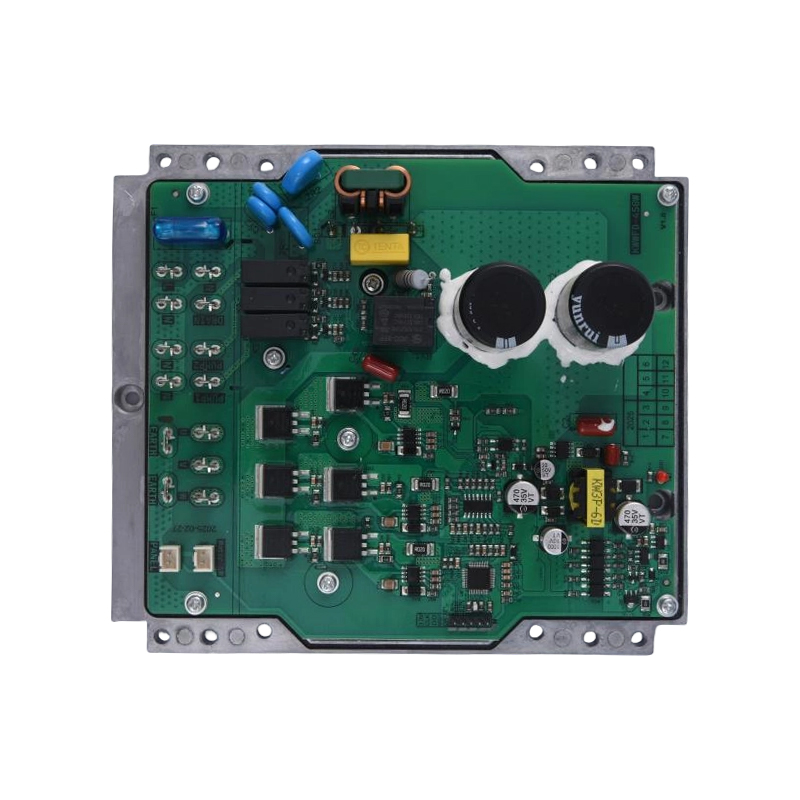
The right Evaporative Air Cooler PCB is the one that matches your motor type, pump and sensor list, supply voltage and the humidity level inside the cooler, and that carries the safety and EMC approvals required in your target market. A board that looks correct on the bench can still fail in the field if it is not protected against water vapor, mineral dust and voltage surges.
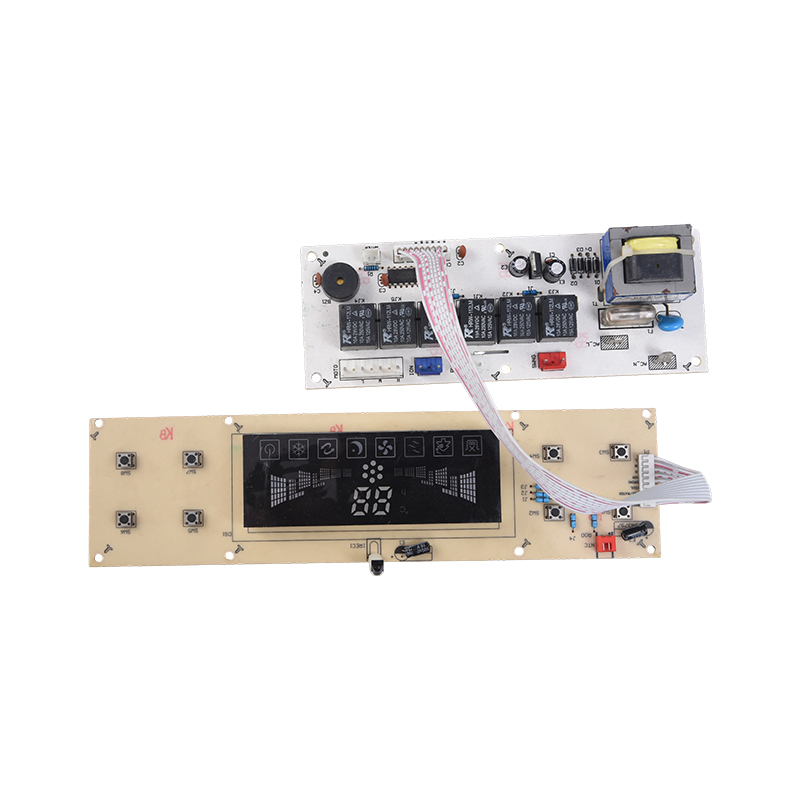
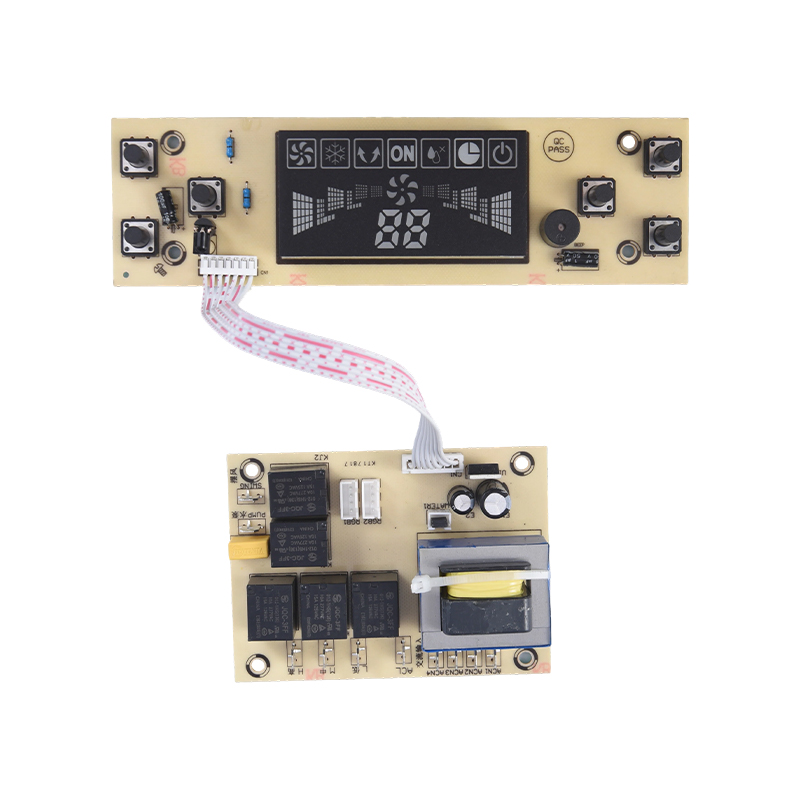
Evaporative coolers are one of the simplest cooling technologies, but their control boards work in a harsh place: damp air, splashing water, a mains powered pump and a fan motor, all in one enclosure. This guide explains what the board must do, where it is used, how to select it, and what to check before you approve a design or place an order.
- Match the loads: fan motor (AC or brushless DC), water pump, swing motor and display must all be supported by the board.
- Protect against moisture: conformal coating, careful layout and sensor design extend board life in damp air.
- Plan compliance early: safety, EMC and standby power rules affect the circuit, not only the paperwork.
- Choose a supplier with process control: assembly quality and testing decide field failure rates.
Content
- 1 Why Evaporative Coolers Need a Dependable Control Board
- 2 Core Functions a Cooler PCB Must Handle
- 3 Where Evaporative Air Cooler PCBs Are Used
- 4 Selection Criteria for an Evaporative Air Cooler PCB
- 5 Protecting the Board Against Humidity and Water
- 6 Water Level and Pump Control That Last
- 7 Safety, EMC and Energy Rules to Plan For
- 8 Common Failures and How to Prevent Them
- 9 How to Evaluate a PCB and Assembly Supplier
- 10 Information to Prepare Before You Request a Quote
- 11 Frequently Asked Questions
Why Evaporative Coolers Need a Dependable Control Board
An evaporative cooler pulls warm air through a wet pad, and the evaporation of water lowers the air temperature. According to the US Department of Energy, evaporative coolers use about one quarter of the energy of central air conditioners and cost about half as much to install (source: US Department of Energy, Energy Saver, Evaporative Coolers). That low running cost is a key selling point, and it depends on the electronics doing their job quietly and reliably.
The control board is the only part that decides how the cooler behaves. It switches the fan speed, starts the pump at the right time, stops the pump when the tank is empty, and responds to the remote or app. If the board fails, the unit either stops or, worse, runs the pump dry or leaves the water on. This is why board selection deserves as much attention as the fan and pad.
Direct evaporative coolers typically reach a wet bulb effectiveness of about 70 to 90 percent under suitable conditions (source: ASHRAE Handbook, HVAC Systems and Equipment, evaporative air cooling chapter). The cooling result depends on airflow and water supply, so accurate fan speed control and reliable pump control have a direct effect on performance.
Core Functions a Cooler PCB Must Handle
Although cooler designs differ, most control boards cover the same set of functions. Use the table below as a starting list when you write a specification.
| Function | What the board does | Design note |
|---|---|---|
| Fan speed control | Switches speed taps on an AC motor, or drives a brushless DC motor with a PWM signal | Decide on AC or DC motor first, since it changes the power stage |
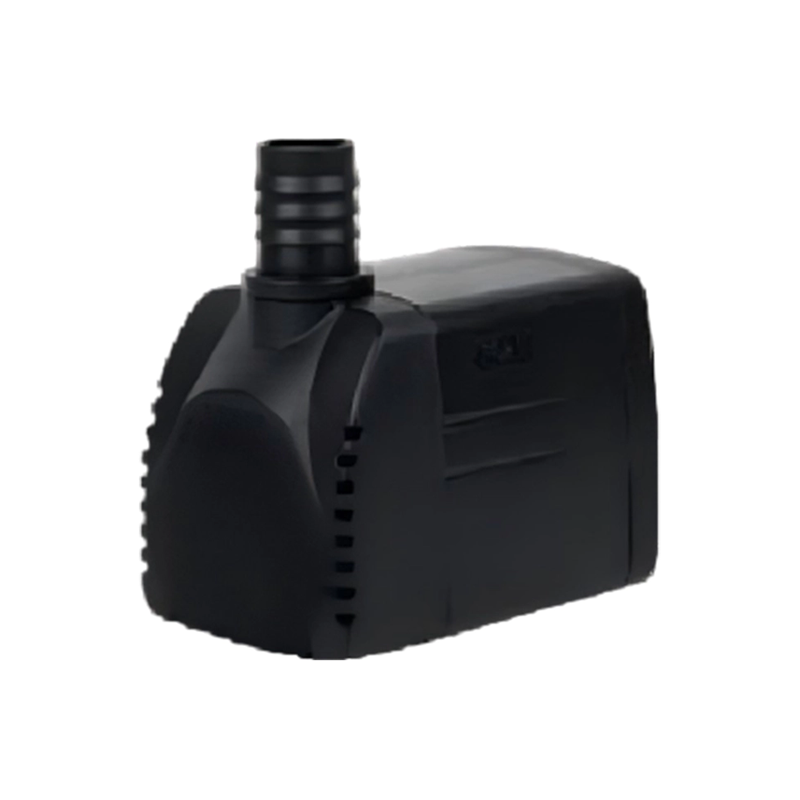
| Water pump control | Switches the pump on and off, with a delay or cycle timing to wet the pad | Use a relay or triac rated for the pump inrush current |
| Water level protection | Reads a float switch or probe and cuts the pump when the tank is low | Avoids dry running and pump damage |
| Swing or louver motor | Drives a small synchronous or stepper motor for air direction | Check current and drive type early |
| Timer and modes | Provides timed shutdown, natural wind, sleep and similar modes | Keep the mode logic in firmware so it is easy to adjust |
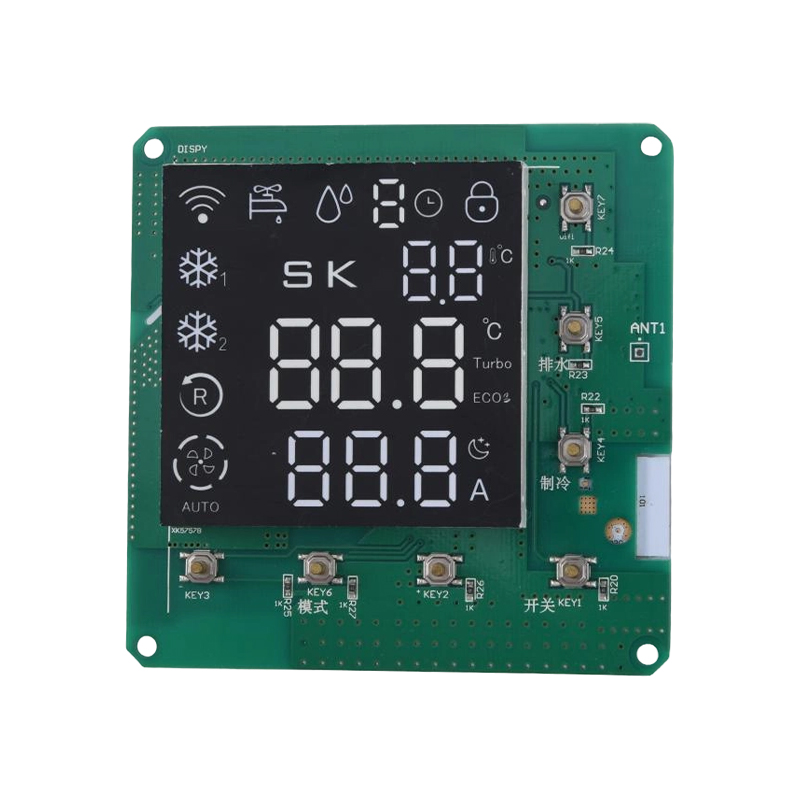
| Remote and display | Receives infrared or radio commands, drives LEDs, a display or a touch panel | Keep low voltage signals away from mains traces |
| Wireless control | Adds Wi-Fi or Bluetooth for app control | Needs extra antenna space and radio approvals |
| Protection | Over temperature, over current, tilt or lid switch, and surge protection | Match the protections to the safety standard for the product |
Where Evaporative Air Cooler PCBs Are Used
The same basic board concept is adapted to several product types. Knowing your product category helps you decide what the board needs to carry.
Portable and tower coolers for homes and offices
These units are the largest group. They are small, use a single phase fan motor, a small pump and a water tank. The board is usually compact, with a remote receiver, a few buttons and a simple display. Cost, noise and standby power are the main concerns.
Large commercial and industrial coolers
Workshops, warehouses, kitchens and event spaces use larger coolers with high airflow. These often need more powerful motor drives, multi speed control, outputs for external valves or drain pumps, and a more rugged enclosure. The board must handle higher currents and longer duty cycles.
Window, wall and ducted units
Fixed units may need integration with thermostats, building controls or a wired wall controller. Inputs for temperature and humidity sensors, and communication ports, become more important than the display.
Agriculture, greenhouses and livestock buildings
Evaporative cooling is common in barns and greenhouses because it is energy efficient in dry air. Boards in these locations face dust, ammonia and high humidity, so coating and component choice matter more than in a living room product.
Outdoor and semi outdoor cooling
Patio and event coolers face rain, sun and large temperature swings. The control board should sit in a sealed compartment, away from the water path, with sealed connectors.
Selection Criteria for an Evaporative Air Cooler PCB
Use the following criteria in order. The first three decide the power circuit, the next three decide reliability, and the last decides whether you can sell the product.
| Criterion | What to confirm | Why it matters |
|---|---|---|
| Supply voltage and frequency | 110 V, 220 to 240 V, 50 Hz or 60 Hz, or a wide input range | Decides components, spacing and the approvals required |
| Motor type | Shaded pole, permanent split capacitor, or brushless DC | Sets the drive circuit, noise and energy use |
| Load current | Fan, pump and swing motor currents, including startup inrush | Prevents relay contact welding and overheating |
| Sensors and inputs | Water level, temperature, humidity, tilt, lid switch | Defines protection and smart features |
| Environment | Indoor living space, workshop, farm or outdoor | Decides coating, connectors and enclosure sealing |
| Substrate and copper | FR-4 grade, copper weight, board thickness | Affects heat, strength and mains isolation |
| Certification | Safety, EMC, RoHS and local energy rules | Needed for customs, retail and tender requirements |
For flame retardancy, ask for laminate rated UL 94 V-0, the common requirement for boards that carry mains voltage (source: UL 94, Tests for Flammability of Plastic Materials). Standard FR-4 laminate has a glass transition temperature near 130 to 140 degrees Celsius, and higher Tg grades are available when the board sits near heat sources (source: IPC-4101, Specification for Base Materials for Rigid and Multilayer Printed Boards).
Protecting the Board Against Humidity and Water
Moisture is the main enemy of a cooler control board. The air inside the cooler is humid by design, and mineral dust from hard water can settle on the board and become conductive when wet. Over time this causes leakage, corrosion and false triggering of sensors. A few design steps reduce these risks sharply.
Placement and enclosure
- Place the board above the water level and away from the pad, the pump outlet and the water tank vent.
- Use a separate compartment or a sealed box for the board where the design allows it.
- Choose an ingress rating suited to the product. For splash exposure, the IP code system in IEC 60529 defines tests such as IPX4 for splashing water (source: IEC 60529, Degrees of protection provided by enclosures).
Conformal coating
A conformal coating adds a thin protective film over the assembled board. Coating types such as acrylic, silicone and polyurethane are qualified under IPC-CC-830 and each has different strengths: acrylic is easy to repair, silicone handles temperature swings, and polyurethane offers good chemical resistance (source: IPC-CC-830, Qualification and Performance of Electrical Insulating Compound for Printed Wiring Assemblies). Keep the coating off connectors, relays with open contacts and test points unless they are masked first.
Layout details that help
- Use slots or wide spacing between mains and low voltage areas to resist leakage across a damp surface.
- Keep high impedance sensor traces short and guard them with ground traces.
- Place tall parts and connectors so that water running down the wiring does not reach the pads.
- Use tin or immersion gold finishes with good wetting, and ask for cleanliness control after soldering to remove flux residue.
Water Level and Pump Control That Last
Water level sensing is the feature most often blamed for field failures. Metal probes in water can corrode quickly when driven with direct current, and mineral scale can build up and give false readings. The following practices make the function more dependable.
- Use a float switch for simple and robust protection. A sealed float with a reed switch has no exposed electrodes and works with hard water.
- If you use probes, drive them with alternating current. An AC excitation signal reduces electrolysis and extends probe life.
- Add a software delay. A short confirmation time avoids false alarms from sloshing water when the unit is moved.
- Cut the pump first. On a low water signal, stop the pump while the fan can keep running, which still moves air and dries the pad.
Also consider a pad drying mode. Running the fan alone for a few minutes after the pump stops helps the pad dry and limits odor and mold, which is a feature many users value and one that is easy to add in firmware.
Safety, EMC and Energy Rules to Plan For
Compliance shapes the circuit design, so check the rules before the board layout is frozen. The list below covers the standards that most often apply to household and light commercial coolers. Your market may add others.
| Topic | Standard or rule | What it affects on the PCB |
|---|---|---|
| Appliance safety | IEC 60335-1 and the relevant part 2 standard | Spacing, flame resistance, protection against shock and overheating |
| Insulation coordination | IEC 60664-1 | Creepage and clearance distances for mains voltage areas |
| Emissions | CISPR 14-1 (EN 55014-1) | Filtering of motor and switching noise |
| Immunity | CISPR 14-2 (EN 55014-2), with tests from the IEC 61000-4 series | Protection against static discharge, fast transients and surges |
| Standby power, European Union | Regulation (EU) 2023/826, with a limit of 0.5 W in off mode and standby, and 2 W in networked standby | Power supply choice and wake up design |
| Hazardous substances | RoHS Directive 2011/65/EU | Solder, components and finishes |
Sources: IEC 60335-1; IEC 60664-1; CISPR 14-1 and 14-2; Regulation (EU) 2023/826 of the European Commission; Directive 2011/65/EU. Fan motors create switching noise, so reserve space for a mains filter and a ground path at the start of the design. Adding them late often forces a new board revision.
Common Failures and How to Prevent Them
Most field failures in cooler control boards follow a small number of patterns. The table links each symptom to a likely cause and a preventive step.
| Symptom | Likely cause | Prevention |
|---|---|---|
| Unit does not start after humid season | Corrosion or leakage on the board surface | Conformal coating, clean assembly, better placement |
| Pump runs when tank is empty | Corroded or scaled level probe, or failed float | Float switch or AC driven probe, with software confirmation |
| Relay stuck on or contacts burnt | Inrush current above relay rating | Choose a relay rated for motor loads and add an arc suppression circuit |
| Fan speed hums or jumps | Poor triac drive, noise on the control line, or weak capacitor | Correct snubber, filtering and capacitor selection |
| Remote works at short distance only | Receiver shadowed by enclosure or noisy supply | Move the receiver, filter the supply, test through the real housing |
| Random reset during motor start | Supply dip or noise on the logic rail | Larger bulk capacitor, separate ground return and a reset supervisor |
| Failed surge or static test | Weak input protection | Varistor, transient suppressor and correct spacing at the input |
How to Evaluate a PCB and Assembly Supplier
A good circuit design still depends on good manufacturing. When you compare suppliers for an Evaporative Air Cooler PCB, ask for evidence of process control, not only a price.
- Workmanship standard: assembly inspected to IPC-A-610, with Class 2 as the usual level for appliances (source: IPC-A-610, Acceptability of Electronic Assemblies).
- Quality system: a certified quality management system such as ISO 9001.
- Testing: in circuit or functional testing on every board, with a fixture that powers the fan, pump and sensors.
- Coating capability: selective coating with masking and inspection under ultraviolet light.
- Traceability: batch codes for boards and critical components so that a field issue can be traced.
- Design support: engineers who can review the layout, suggest cost savings and support certification testing.
You can review the available board options, features and customization on our Evaporative Air Cooler PCB page. If you already have a schematic, motor data and a target market, send them to the team for a technical review and quotation.
Information to Prepare Before You Request a Quote
Complete information shortens the quoting and sampling stages. Prepare the following items.
- Target market and the standards you must meet, such as CE, UKCA or other national rules.
- Supply voltage, frequency and the current of the fan, pump and any other load.
- Motor type and the speed steps or control signal required.
- List of sensors, display type, remote type and any wireless feature.
- Board size limits, mounting holes, connector types and wire lengths.
- Operating environment, and the coating or sealing level you expect.
- Annual volume, sample quantity and target delivery time.
Frequently Asked Questions
Can one board support both AC and brushless DC fan motors
It is possible in principle, but the power stage and firmware are different, so most designs use separate versions. Choose the motor type first, since a brushless DC motor gives finer speed control and quieter running, while an AC motor with speed taps is simpler and lower in cost.
Is conformal coating always necessary
It is strongly advised for any board that sits in the humid air path of a cooler, and it is almost essential for farm, outdoor and coastal use. For a sealed compartment in a dry indoor product, careful layout and a clean process may be enough, but coating is cheap insurance against field returns.
How do I reduce standby power in a cooler with a remote
Use a low power supply design, a microcontroller with a sleep mode, and a receiver that wakes the system only when a valid code arrives. Check your target figure against local rules, such as the 0.5 W limit for off mode and standby in Regulation (EU) 2023/826.
What sample test is most useful before mass production
Run a humidity cycle with the board installed in a real cooler, together with a repeated start and stop test of the fan and pump. This combination exposes coating gaps, relay stress and sensor drift far better than a short bench test.